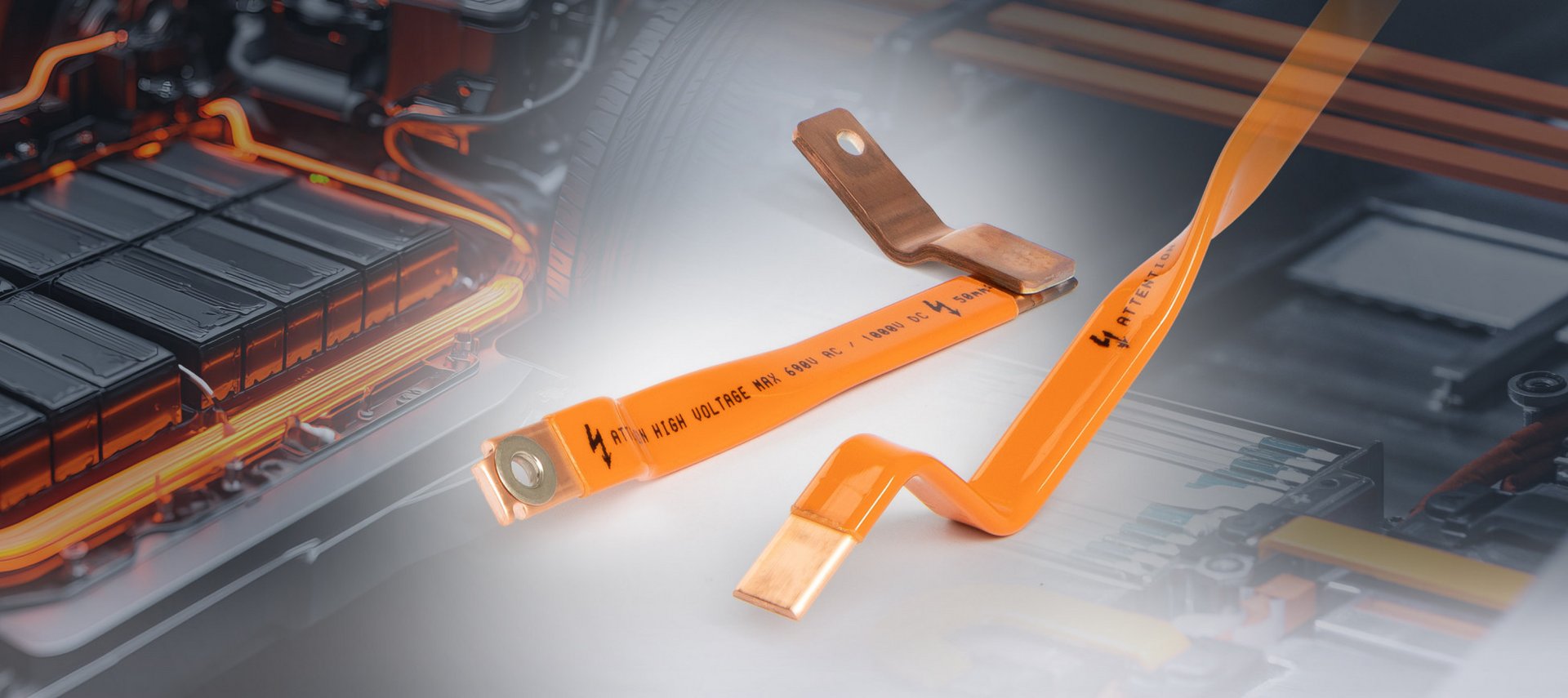
Automakers’ development targets call for ever-shorter charging times for electric vehicles. To achieve this, charging voltages are increasing from conventional 400 V systems toward 800 V and beyond. At the same time, temperature requirements for busbar insulation are becoming more demanding. In many polymers, volume resistivity decreases as temperatures rise, making electrical insulation a critical safety factor. EMS-GRIVORY has developed high-performance polyamides that provide reliable insulation properties even at high temperatures while also reducing weight and costs.
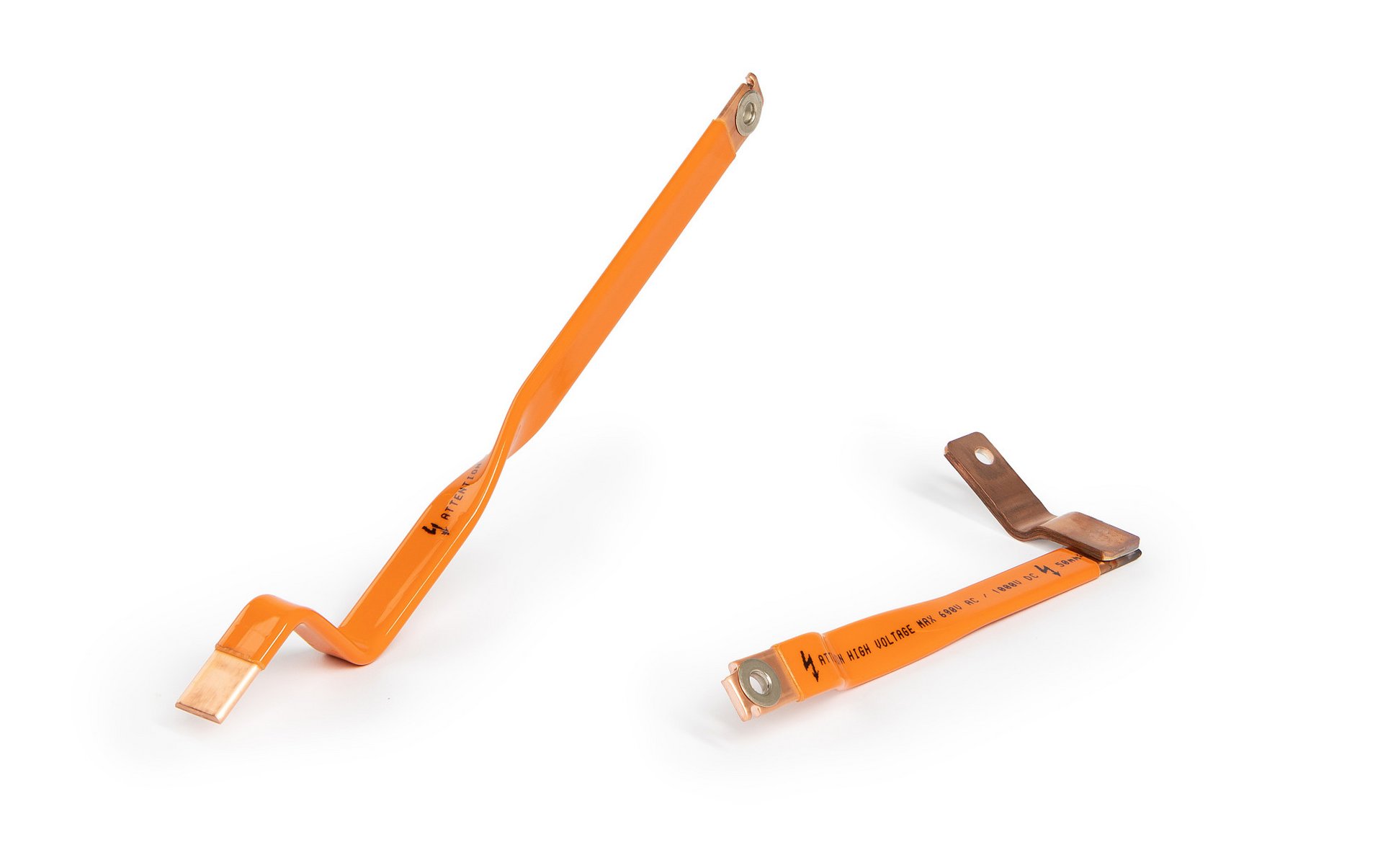
Patented EMS solution for busbars at voltages of up to 1,000 V.
Automakers’ development targets call for ever-shorter charging times for electric vehicles. To achieve this, charging voltages are increasing from conventional 400 V systems toward 800 V and beyond. At the same time, temperature requirements for busbar insulation are becoming more demanding. In many polymers, volume resistivity decreases as temperatures rise, making electrical insulation a critical safety factor. EMS-GRIVORY has developed high-performance polyamides that provide reliable insulation properties even at high temperatures while also reducing weight and costs.
Busbars play a key role in the electrical systems of electric vehicles. These solid copper or aluminum conductors transmit high levels of electrical power in confined spaces and connect components such as the battery, inverter, DC-link systems, and power distribution units. Compared with conventional high-voltage cables, they enable more compact, space-saving power distribution.
Shorter charging times are made possible primarily by higher electrical charging power. However, this also increases the thermal load on current-carrying components. Busbars can briefly reach temperatures of around 130 °C and, in extreme cases, even up to 150 °C. In many polymers, electrical insulation performance decreases as temperatures rise. This becomes a critical challenge, particularly in 800 V electrical systems. As voltage and power increase, the polymer insulation surrounding the busbar therefore becomes a component that contributes significantly to the safety and service life of the high-voltage system. EMS-GRIVORY addresses this challenge with specially developed high-performance polyamides. Even at temperatures between 100 and 150 °C, they exhibit a significantly lower decrease in volume resistivity, ensuring reliable electrical insulation even under demanding conditions.
Modern high-voltage architectures typically use conductor cross-sections ranging from 35 mm² to 120 mm². The busbars are coated with a polymer insulation layer in an extrusion process and then cut to the required length. However, a busbar rarely runs in a straight line from one connection point to the next within the vehicle. Space within the battery pack and high-voltage system is limited. The busbars must therefore be routed through tight spaces between electrical components and, for example, around battery modules or power electronics components. The smaller the possible bending radius, the more compactly the high-voltage system can be designed and the more effectively the available installation space can be used. To achieve this, the busbars are formed into their final shape after the insulation has been applied. The bending radii are often only one to two times the thickness of the conductor. This places high demands on the insulation layer: On the outside of the bend, it must neither crack nor become excessively thin, while wrinkling must be prevented on the inside. EMS-GRIVORY has developed special high-performance polyamides with particularly strong adhesion to copper and aluminum for this purpose. Their high ductility and strong adhesion allow the already insulated busbars to be bent to tight radii without compromising the protective function of the insulation.
The combination of high ductility, reliable adhesion, and excellent electrical insulation properties at high temperatures enables thin insulation layers and tight bending radii. This allows the limited installation space in electric vehicles to be used more effectively. At the same time, material usage and component weight can be reduced, providing additional economic benefits.
EMS-GRIVORY’s specialty grades are continuously being further developed and are already in series production at renowned European and Chinese car manufacturers. These high-performance polyamides therefore make an important contribution to compact and reliable high-voltage systems for the next generation of electric vehicles.