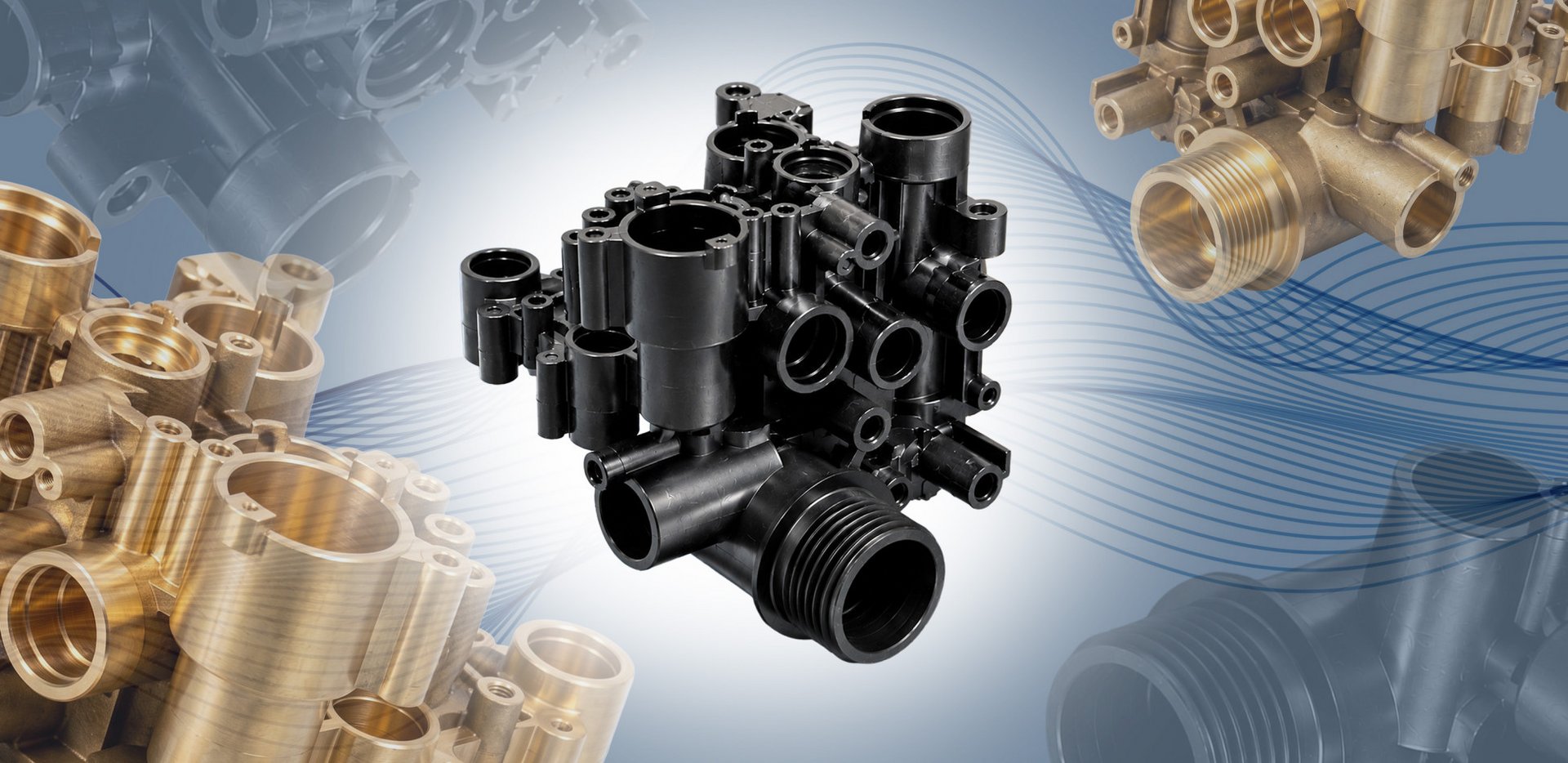
Grinova WLS combines exceptionally high weld line strength with reduced notch sensitivity, opening up new possibilities for safe, lightweight, and cost-effective highly loaded components. Compared with standard PPA, Grinova WLS offers approximately 30% higher weld line strength. This enables wall thicknesses to be reduced by up to 25% and component costs by approximately 20% – or component performance to be increased, with up to 30% higher burst pressure or up to 40% larger component diameters at the same wall thickness.
Grinova WLS combines exceptionally high weld line strength with reduced notch sensitivity, opening up new possibilities for safe, lightweight, and cost-effective highly loaded components. Compared with standard PPA, Grinova WLS offers approximately 30% higher weld line strength. This enables wall thicknesses to be reduced by up to 25% and component costs by approximately 20% – or component performance to be increased, with up to 30% higher burst pressure or up to 40% larger component diameters at the same wall thickness.
Weld lines are a critical weak point in injection-molded, fiber-reinforced components. They form when melt fronts meet. At these locations, fiber reinforcement is limited, and trapped air can further weaken the bond. This is often compensated for with greater wall thicknesses, resulting in higher material consumption, weight, and costs. Grinova WLS offers significantly higher weld line strength, enabling more robust and economical component designs.
Compared with standard PPA, Grinova WLS sets a new performance level. Even after demanding water and glycol aging, the material offers superior mechanical load-bearing capacity and up to 68% higher pressure fatigue strength – for greater reliability and safety under high loads.
For a defined notch with a radius of 1 mm perpendicular to the fiber direction, Grinova WLS achieves 57% higher tensile strength than standard PPA. This provides greater design freedom and robustness in particularly highly loaded areas.
The higher weld line strength can be used to reduce material consumption or increase component performance. At the same load, wall thickness can be reduced by up to 25%. This can reduce component costs by approximately 20% and also lower weight. At the same time, thinner walls shorten cooling times and increase production efficiency.
Alternatively, with the existing design, burst pressure can be increased by 30%. At the same wall thickness, component diameters can be increased by up to 40%. This creates design freedom for larger flow cross-sections and higher pressure levels.
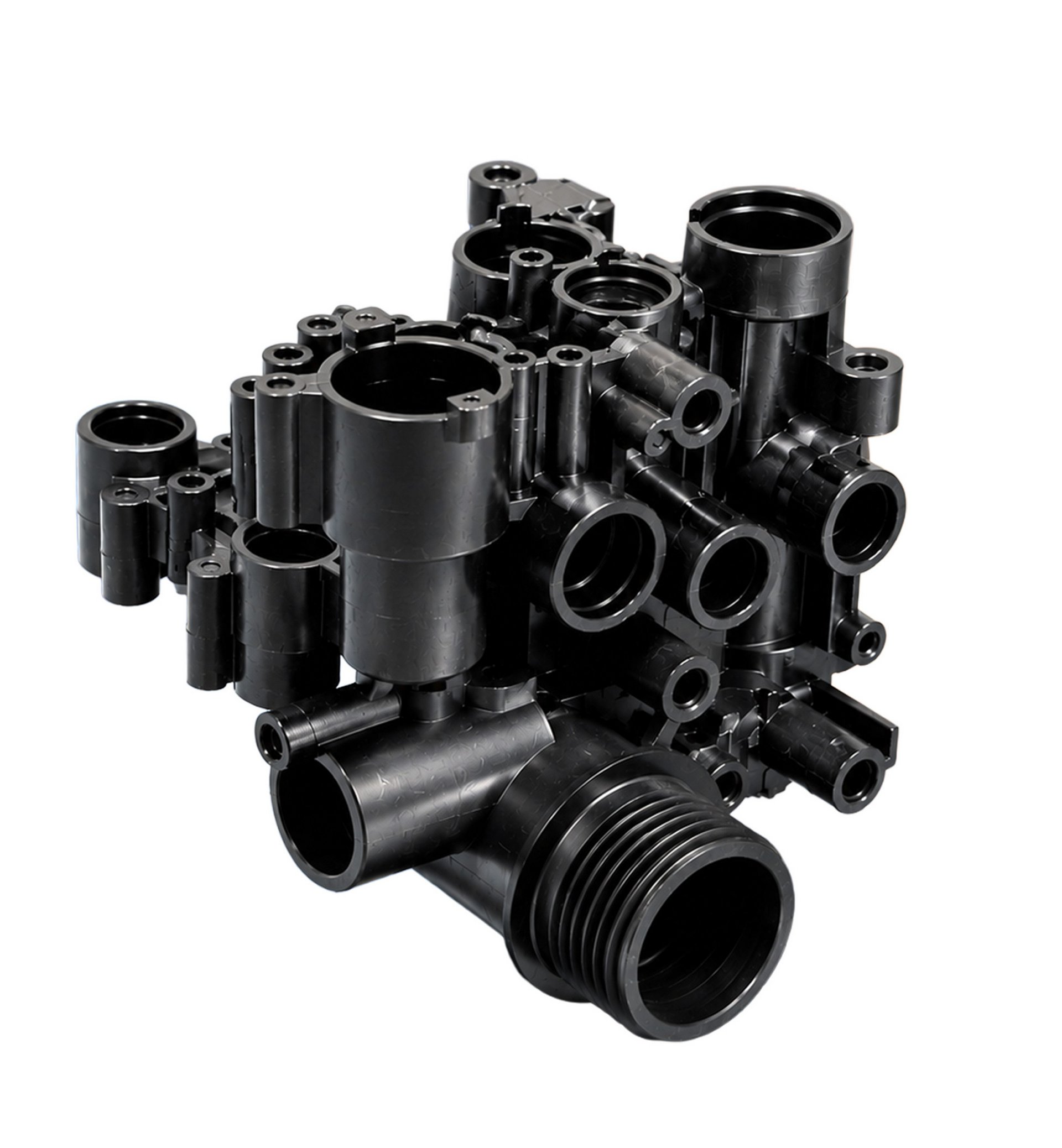
Grinova WLS is the high-performance solution for demanding injection-molded parts with weld lines, notch-sensitive areas, and high exposure to hot water or water-glycol mixtures. Typical applications include valve blocks, manifolds, pump and meter housings, connectors, and other media-carrying components in automotive and industrial applications.
The portfolio includes reinforced grades for demanding mechanical and thermal applications.
| Performance | Design freedom | Customer benefit |
|---|---|---|
| +30% weld line strength | Up to 25% thinner walls | Approximately 20% lower component costs, enabling more demanding applications |
| Reduced notch sensitivity | Up to 40% larger diameter | Lower material consumption & weight |
| High hydrolysis resistance | +30% burst pressure | Higher reliability & robustness |
Together, we identify where Grinova WLS can translate its high weld line strength into lower costs, lower weight or higher component performance.
EMS-GRIVORY supports customers from the initial design concept through series production. Material selection, component and mold design, CAE-supported optimization, testing, and processing support help translate the additional weld line strength into measurable component and cost benefits. The objective is not simply a stronger material, but a more efficient component solution.