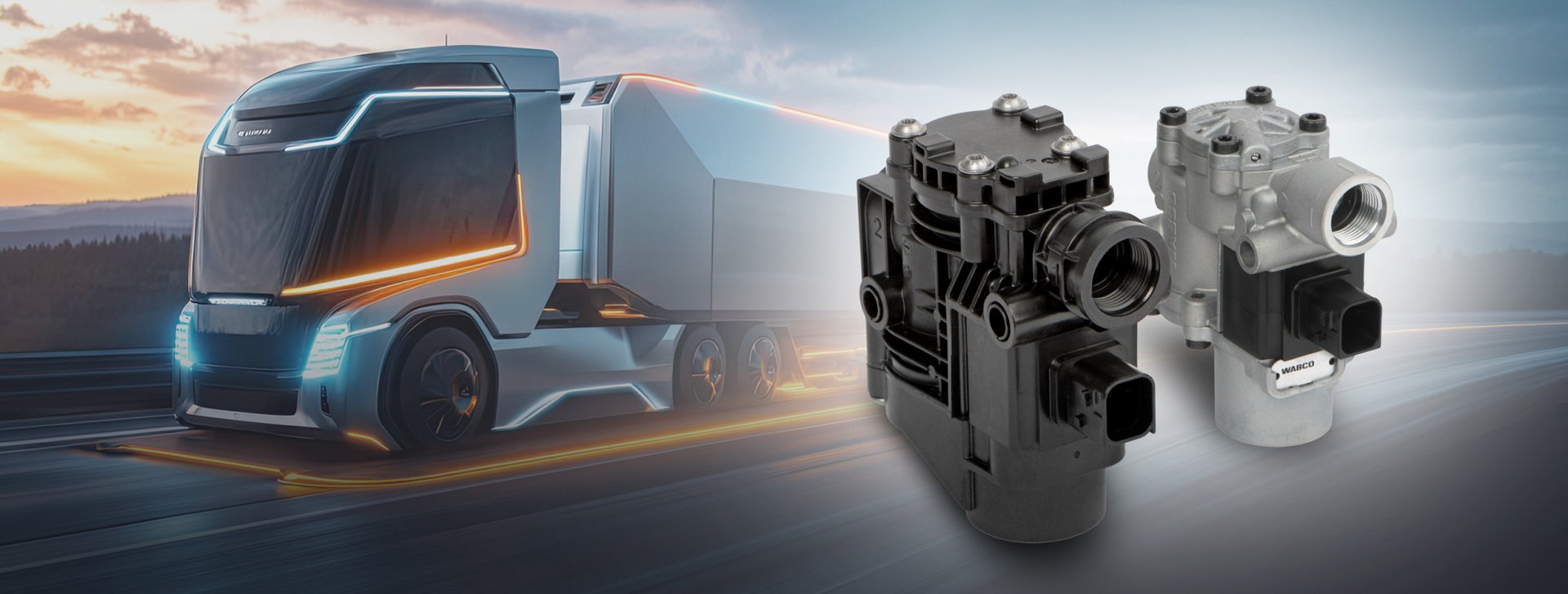
Lower weight, reduced energy consumption and lower manufacturing costs: The ABS solenoid valve made from Grivory HT demonstrates the potential of high-performance polymers for metal replacement in commercial vehicles. The high-performance polyamide replaces the previous aluminum design, reducing component weight by 33% and lowering the carbon footprint by approximately 60%. At the same time, manufacturing costs can be reduced by approximately 30%.
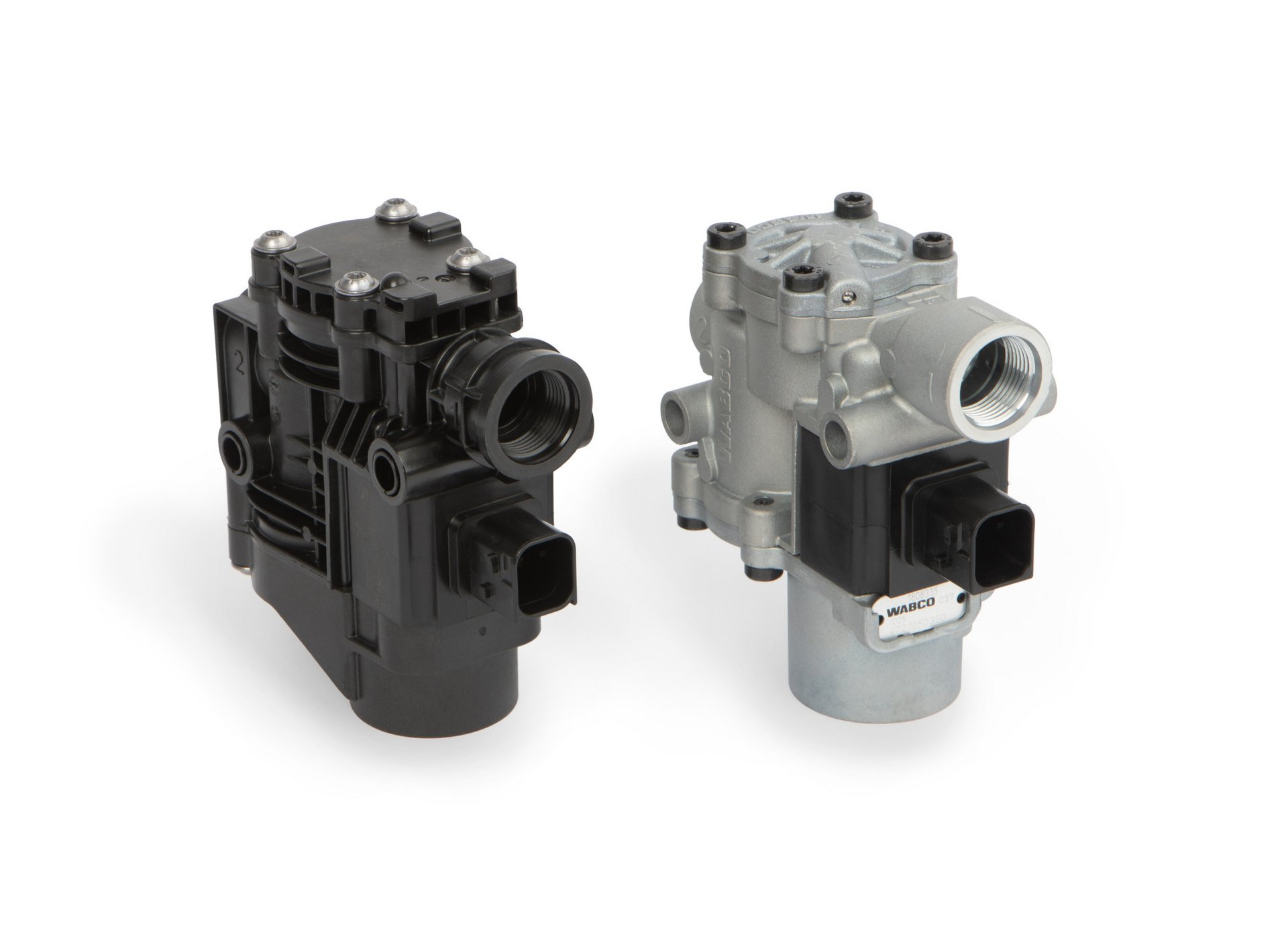
Comparison of the previous aluminum design with the new EMS polymer solution.
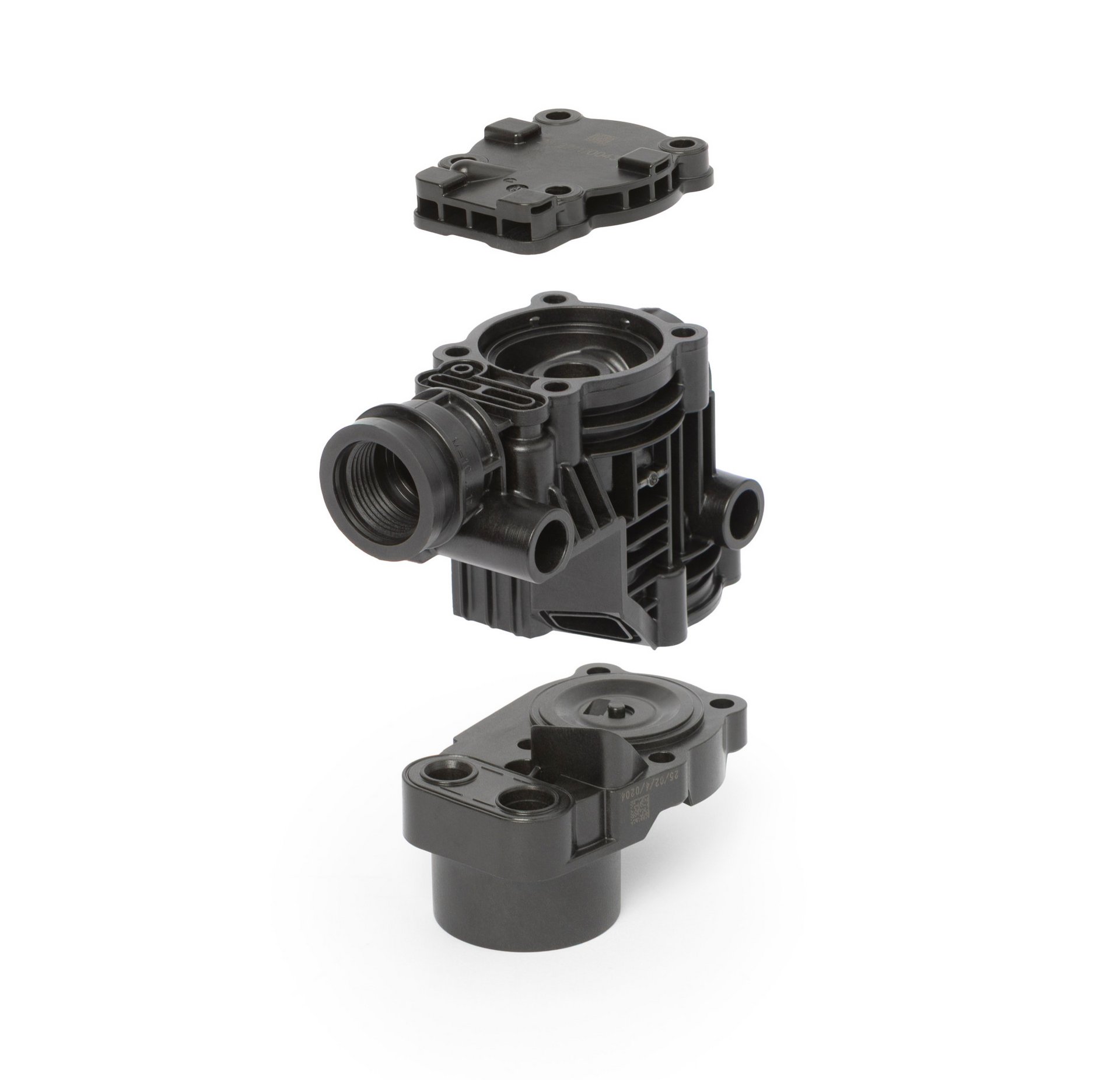
Exploded view of the ABS solenoid valve showing the individual components.
Lower weight, reduced energy consumption and lower manufacturing costs: The ABS solenoid valve made from Grivory HT demonstrates the potential of high-performance polymers for metal replacement in commercial vehicles. The high-performance polyamide replaces the previous aluminum design, reducing component weight by 33% and lowering the carbon footprint by approximately 60%. At the same time, manufacturing costs can be reduced by approximately 30%.
The valve component is part of an ABS modulator for commercial vehicles. It regulates the air pressure to the brake cylinders, helping to prevent the wheels from locking and keeping the vehicle controllable even under heavy braking. As the component must withstand millions of braking cycles over its service life, reliable operation and high fatigue strength are essential.
In addition, the component is exposed to demanding environmental conditions. It must withstand temperatures from -40 °C to +80 °C as well as environmental influences. EMS high-performance polyamides meet these requirements with high mechanical and chemical resistance.
The switch from aluminum to the EMS solution enabled the component design to be specifically adapted to injection molding. Pronounced ribbing provides the required stiffness, while complex geometries can be produced in a single manufacturing step. The extensive post-processing required for the aluminum version is eliminated.
For a safety-critical component, reliable operation throughout its entire service life is essential. A minimum service life of one million braking cycles was required for the application. In endurance testing, however, the polymer component withstood more than seven million braking cycles, significantly exceeding the required service life. The change of material also has an impact on production. The EMS solution is processed at approximately 340 °C, while aluminum is processed at approximately 650 °C. The significantly lower processing temperature helps to reduce energy consumption by up to 25%. This gives the polymer solution clear economic advantages.
Only the interaction of material, polymers-appropriate design and a manufacturing process tailored to it unlocks the full potential. The ABS solenoid valve demonstrates how technical requirements for safety and fatigue strength can be combined with resource efficiency and cost-effectiveness.