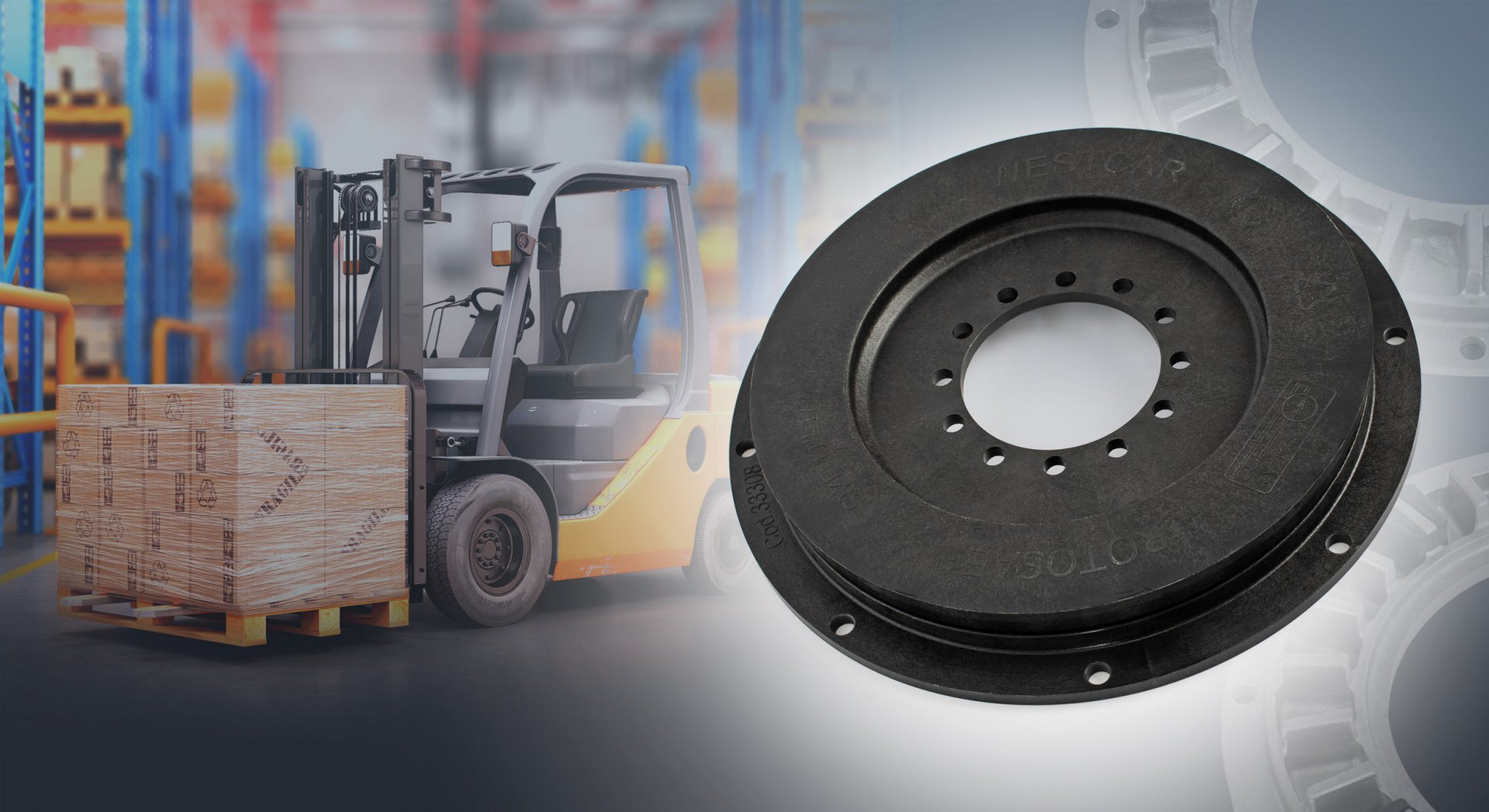
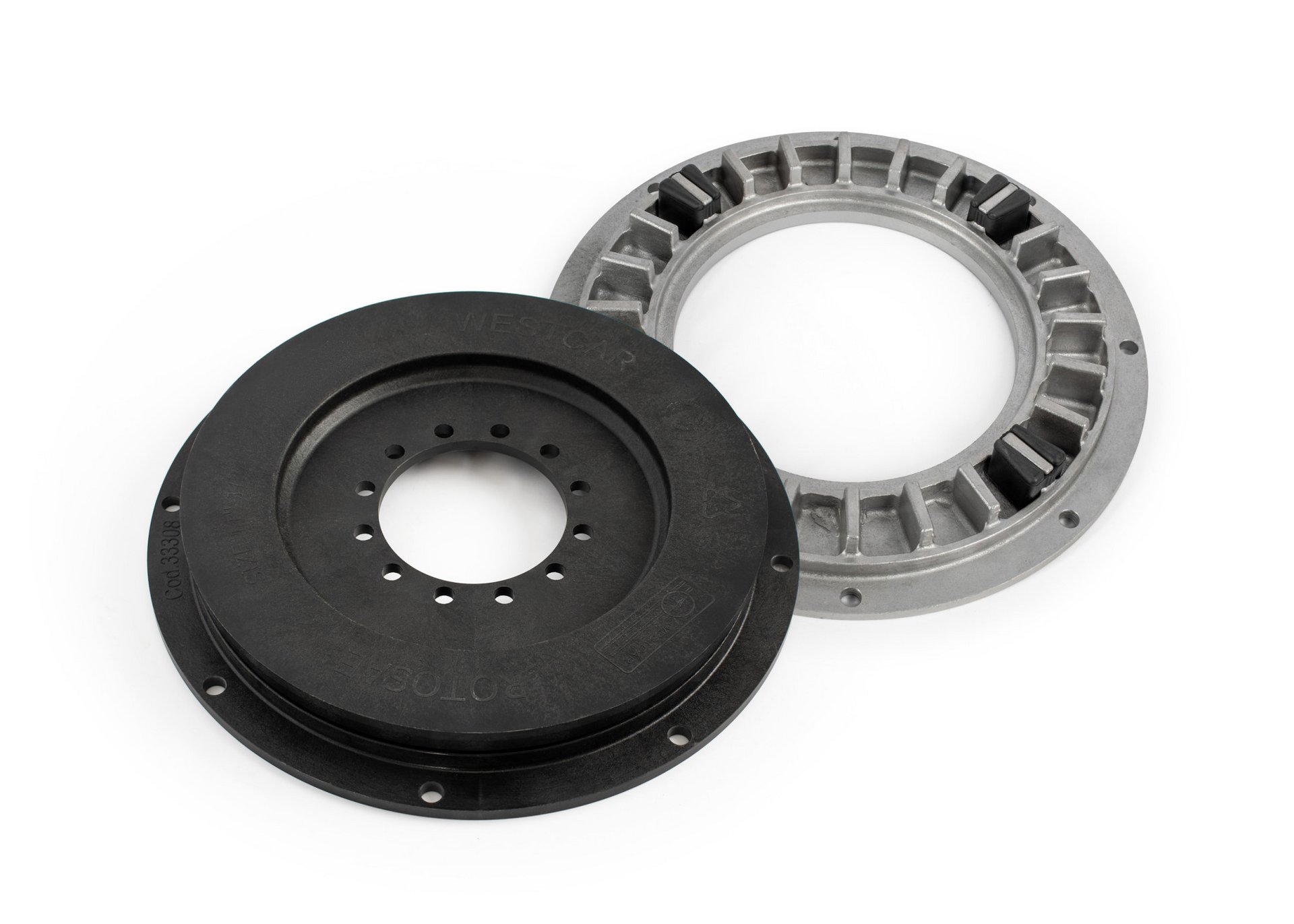
In mechanical engineering, heavy and robust metal components have traditionally dominated. However, this standard is changing: innovative polyamides are opening up new possibilities for lighter, more efficient, and more cost-effective solutions. A recent example is the development of a clutch disc made from Grivory GV for industrial engines, used in applications such as concrete mixers, forklifts, tractors, and asphalt mixers.
By replacing metal with EMS high-performance polyamides, this application achieved a weight reduction of around 30% and cost savings of approximately 40%.
In mechanical engineering, heavy and robust metal components have traditionally dominated. However, this standard is changing: innovative polyamides are opening up new possibilities for lighter, more efficient, and more cost-effective solutions. A recent example is the development of a clutch disc made from Grivory GV for industrial engines, used in applications such as concrete mixers, forklifts, tractors, and asphalt mixers.
In particular, in European mechanical engineering – an industry strongly focused on exports – the weight of components plays a crucial role. Every kilogram saved not only improves energy efficiency but also strengthens international competitiveness. This is exactly where EMS solutions come in: they enable significant weight reduction while maintaining high mechanical strength and reliability.
Through close development collaboration between material experts and industrial users, a clutch disc made entirely of glass fiber-reinforced high-performance polymer was realized for the first time. This innovative metal replacement solution replaces conventional aluminum die-cast components and offers clear advantages: a weight reduction of around 30% and cost savings of approximately 40% compared to the previous metal component.
The key challenge was to reliably transmit the high mechanical forces present in drive systems with diameters of up to 466 mm. The maximum permissible torque is 4,650 Nm at speeds of up to 2,800 rpm. Extensive mechanical calculations and injection molding simulations made it possible to model the component’s behavior and optimize the design. But the benefits go beyond the final product: in production, the manufacturer also benefits from a 43% reduction in energy consumption compared to the previous aluminum component. As a result, the new polymer solution contributes to greater efficiency, cost-effectiveness, and sustainability throughout the entire lifecycle.
This development clearly demonstrates that EMS high-performance polymers represent a technically equivalent – and in many respects superior – alternative to traditional metals. They make a decisive contribution to reducing weight and energy consumption while opening up new possibilities for innovative and cost-efficient designs in mechanical engineering.